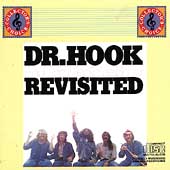
It is Mardi Gras and Spring Break all rolled into one. Then, lit and smoked. The band members’ tongues are firmly pressed into their cheeks as they look for a party. They make you cry, laugh, whoop and holler. Then, they’ll roll you another one. Yes, the Doctor is in the house.
First, there was George Cummings, Ray Sawyer and Billy Francis and it was good. Then came Dennis Locorriere and it was better. In 1969 a club owner asked for their name.and their decision-making probably went something like this:
Cummiings:
“We ah,” (pulls out another zigzag rolling paper) “we need a name” (rolls zigzag with one hand and licks it). “The man wants us to give him a band name.” (takes a “strike anywhere”” match, scrapes it on his unshaven chin, lights the zig zag and takes a long inhalation.) “Well, any ideas? (the cigarette and conversation pass to the right.)
Francis:
(Large puff, followed by a cloud of exhalation) “Damn, that’s tough. Any of you got some pills? My head is killing me.” (Pockets are searched and contents placed on table)
Locorriere:
(Looking at contents on table) “Wow! Man, that is a god damn medicine show! Hey, let’s call ourselves the ‘Medicine Show.’” (large toke, and the conversation moves to the right.)
Sawyer (who wears an eyepatch due to a 1967 car accident):
“Naw, not good enough. We need a hook. That’s it! How ‘bout “Dr. Hook & the Medicine Show?” (Nods all around; mint juleps are sipped; roach is extinguished.)
Cummings:
“Umm. What were we talkin’ about?”
Well, maybe not like that but that is how I have always envisioned it (according to wikipedia Sawyer is “mistakenly considered Dr. Hook because of the eyepatch.”) The band had a string of top 100 hits until 1983 when Sawyer left the band. Their early, gritty, hits are the subject of their pre-disco 1976 Best of Dr. Hook & the Medicine Show release called “Revisited.”
You won’t find the later hits “Sexy Eyes,” "When You're in Love with a Beautiful Woman" or “Walk Right In” here. You will find an amalgamation of the band’s best “quirky” work, with almost all of the lyrics written by the late, great writer/poet Shel Silverstein. . Sure, you get the time-tested hit “Cover of The Rolling Stone,” but you also get “Sylvia’s Mother,” which tells of a man trying to telephone his ex-girlfriend, Sylvia Avery, to say one last goodbye, but unable to get past her mother; “Acapulco Goldie,” a tale about a beautiful Acapulco prostitute; “Freakin’ At The Freakers’ Ball,” a journey best characterized as a visit to San Francisco’s yearly Exotic-Erotic Ball; “Makin’ It Natural,” about “going straight” over a woman; “Penicillin Penny,” which explores the life of a Sunset Strip streetwalker with venereal disease; “Get My Rocks Off,” a ditty about what things are needed for the singer to, well, get his rocks off; “Carry Me, Carrie,” a poetic look at a delusional, alcohol addicted, street person; “Queen Of The Silver Dollar,” the saga of a female bar fly who is ultimately won by the singer; and “Roland The Roadie And Gertrude The Groupie,” the story of a roadie in love with a groupie who is only in love with groups.
Okay, this isn’t classic. It isn’t pop. It isn’t straight ahead rock. It’s not jazz, What is it? It is Mardi Gras and Spring Break all rolled into one.
It was 1975, the year I graduated from high school. Among the rock/jazz crossover musicians of the day was a 23 year old unusual looking woman, Phoebe Snow, with a voice of - well, as the New York Times of the day observed, “ a contralto grounded in a bluesy growl and capable of sweeping over four octaves.” Although known as a great cover artist, that year Snow had her first successful self-written recording, “Poetry Man,” a soft jazzy bluesy acoustic gem sung with staccato delivery that fit seamlessly with the decade’s soft rockers such as James Taylor, Harry Chapin, Paul Simon, Linda Ronstadt and Carly Simon. Despite a lifetime of disputes with record companies and personal difficulties Snow continued to record up through 2008 (in fact she performed at the wedding of satellite radio star Howard Stern.) She was scheduled to release a new album and tour in 2010 but, on January 19, 2010, suffered a brain hemorrhage, underwent surgery, and was placed in a medically induced coma. Since that time she has only briefly regained consciousness.
Snow captured hearts with a string of singles in the top 100 on the UK and US pop and adult contemporary charts. By 1981 she had amassed an amazing body of work, the best of which was compiled on her 1981 compilation release The Best Of Phoebe Snow. The 1981 album should not be confused with her 2002 greatest hits compilation “Very Best Of Phoebe Snow.” “The Best Of Phoebe Snow” has Snow’s best studio work while “Very Best Of Phoebe Snow” contains a smattering of hits and covers with three live performances.
Snow is a music stylist. She is not normally a songwriter yet many of her own pieces became hits. On “The Best Of Phoebe Snow” you hear the studio versions of her best music.
First comes her song “Two-Fisted Love.” It is reminiscent of work by Minnie Ripperton, a Snow contemporary. It is a wondrous soft jazz rock piece - although the violent imagery of the song makes it very non-P.C. today. “All Over” is another song that Snow wrote. It is a late 1970’s catchy hit that allowed Snow to stretch her vocal range. Snow also sings her self-written hit “Poetry Man” and follows it up with an old jazz blues called “Teach Me Tonight” that was written by Gene DePaul and Sammy Cahn.
On the “Best Of” album she covers one Beatles song, “Don’t Let Me Down” and a tune written by Paul McCartney, Antoine "Fats" Domino and Dave Bartholomew called “Every Night.” Snow’s beautiful renditions put the originals to shame. The studio musicianship is incredible and Snow’s voice is intoxicating. She also covers Stephen Bishop’s “Never Letting Go” that, once heard, will get a hold on you, and she croons beautiful renditions of “Shakey Ground” written by A.C. Boyd, Alphonso Boyd, E. Hazel, J.T. Bowen and Jeffrey Bowen and “Love Makes A Woman” by C. Davis, E. Record, G. Simms, and W. Sanders.
The last track on the album is “Harpo’s Blues,” a song penned by Snow that reached No. 20 on the adult contemporary charts in 1975. It is as close to a sultry jazz nursery rhyme as you can get. It is dinner jazz punctuated by beautiful piano, slow acoustic guitar, sax accents, stand-up bass and drums played with brushes.
Phoebe may not be able to speak to us now, but, in 1981 her “Best Of” album spoke to us directly and, today, is still the perfect background for a quiet evening at home with someone you love.
When you’re a classic rock fan you get used to new & supposedly improved versions of your old favorites getting re-issued every few years. Usually it’s just an attempt by the record label to generate some revenue on something they don’t have to spend a lot of money to create. That’s probably the case with this batch, too, but each of these releases gives the consumer some decent value for money.
Robin Trower - At The BBC 1973-1975
First up is Robin Trower At The BBC 1973-1975. Do I even need to tell you how great this is? This 2CD set is a mandatory purchase for Trower fans and anyone who loves outstanding guitar playing. This is Trower leading his excellent trio with James Dewar on bass & vocals during their peak time together. Reg Isidore plays drums on the 1973-74 sessions and is replaced by Bill Lordan for the 1975 recordings. There are two radio sessions from 73 and 74 and one from 75, recorded for John Peel and Bob Harris. They’re not playing live in the studio, but basically re-creating the classics from the essential albums Twice Removed From Yesterday, Bridge Of Sighs and For Earth Below. Most of the versions tend to be a little faster and rawer since they were done quickly in a day at a radio studio. Trower’s playing is inspired as always and the vocals of James Dewar are warm and inviting. The best part is a live BBC concert broadcast from 1975 that rivals the official Live album issued the following year. The 8 page booklet is a little light on photos but contains good liner notes from Malcolm Dome of Kerrang and Classic Rock fame. Might be a little pricy since it’s an import but completely worth it.
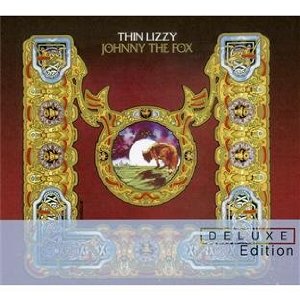
Thin Lizzy - Jailbreak and Johnny the Fox: Reissues
I’m sure everyone reading this owns Thin Lizzy’s 1976 twin peaks of Jailbreak and Johnny The Fox on at least 1 format. If you own the original LP’s, the playing surface is probably destroyed and the covers have water rings from inconsiderate friends leaving their empties on them. The CD’s issued in the 90’s suffered from low levels and flimsy packaging, they’re now both double discs with improved sound and fancy full color booklets. The remasters of the original albums sound great and the volume level is up but not overly compressed. The bonus material on the 2nd discs contain some remixes done by Joe Elliot of Def Leppard with some new guitar parts added by Scott Gorham. I was a little worried about this, but they all sound good but I honestly don’t think I’ll listen to them all that often. The BBC sessions, however, I will, especially the extra fired up versions of “Warriors,” “Emerald” and “Johnny The Fox Meets Jimmy The Weed.” Works in progress like “Scott’s Tune” and “Blues Boy” are cool to hear but, again, probably not gonna play those a whole lot. There’s a very funky instrumental run through of “Johnny The Fox” that’s very cool, you can really hear that they’re having a good time getting the groove right on this song. The booklets come with great photos, liner notes and new interviews conducted by Neil Jeffries. The UK label Back On Black has reissued both of these albums and other jewels from the Thin Lizzy catalog on heavy weight vinyl. If you’re not sure whether to get the CD’s or LP’s, I’d say get ‘em both. You work hard, you deserve it.
Last up is a real classic rock connoisseur favorite, Deep Purple’s 1975 overlooked gem Come Taste The Band. As a huge Ritchie Blackmore fan, I avoided this album for many years but as soon as I let my guard down I realized just what a great album it is. Tommy Bolin’s playing is unfuckingbelievable and he’s one of the guys that helped bond me with the two clowns that run this website. I think I’m on a first name basis with just about everyone on the planet who loves this album. The reissue of Come Taste The Band follows the template laid down by the awesome Machine Head double disc. Disc one is the original album with excellent remastered sound and a bonus track of the 7” edit of “You Keep On Moving.” Disc two is a remixed version by Iron Maiden’s producer Kevin Shirley (he’s also responsible for the awesome audio on the double live Led Zep DVD). The remixes don’t sound drastically different but the guitars and the drums are a bit more upfront. The best part is that the songs are all longer. No fade outs or edits and there are some minor differences in the vocals and lyrics. Bonus tracks include a previously unreleased song called “Same In L.A.” that’s pretty cool but the best is the final track “Bolin/Paice Jam.” Who wouldn’t want to hear almost 6 minutes of Tommy Bolin blazing away accompanied by one of rock’s greatest drummers? Fucking excellent!
Every time a new Gumshen CD is hand delivered to me by Postman Sal, I get overwhelmed by a mixture of emotions. First, it’s elation. Sal inevitably cringes and recoils in fear as I burst from behind my desk, give the old dude a bear hug, and thank him for being conceived, his parents for conceiving him, and his parent’s parents for conceiving them. He’ll leave and I’ll return to my chair, staring with that gleeful smirk that I get. Second, I’m overcome with this sense of privilege and power, for I have the new Gumshen in my possession and you don’t . . . Ha! Take that you cretins! Then, there’s the crash of reality. Third, I’m dropped into a mirthful state of depression, for how . . . how many more words can I hammer out to describe what I know will be a sonic thrill ride without repeating myself? I mean, I’ve reviewed the bands last three releases, they have achieved that near God-like stature in my music collection. Where can I go with the written word? And then it hits me . . . WWGD. What Would Gumshen Do?
I had to channel my inner Gumshen. Plain and simple. Even if I never achieve the godhead status of Gumshen with my own craft, the very least I can do is make the attempt. So . . . here goes:
What You Make It is technically the fifth release from this musical wonderment known as Gumshen, the fourth under the actual Gumshen name, and arguments will rage for evermore that this is the best recording to date. That argument will last only as long as you’re playing it . . . and then you’ll go back and drop in March of the Februaries, Super Buffet, or Stew and you’ll swear those are the best. What I’m getting at is this: Gumshen never fail to deliver a product that will please you as a listener, inspire you as an artist, challenge you as an intellect, or frustrate you as a music critic. I say frustrate because writing about these guys is one of those exercises in futility, for one will never actually capture the true essence of the music by merely chucking a bunch of words onto a page. What describer can I possibly plant in front of my nouns and verbs that I haven’t used before? Ah ha! I’ll make up my own! No . . . no, that’s just silly.
“Not Every One Of Us” opens the disc with a great modern pop-rock sound (no . . . not the sugary treat that explodes in your mouth), crisp guitars and keys plinking a simple little melody, the drums join in and help build the tempo, the bass saunters on in and adds the sultry textures . . . and then Ron Hippe’s vocals stop the world and we melt into a puddle of ourselves. At times, I hear a resemblance to Daryl Hall in that voice. Soulful, yet with a playful air, Hippe’s voice gets me on this track much like it did on “Dandelions” (Stew) or “Gone Too Soon” (Super Buffet). The song as a whole is a marvelous piece of music and another great example of how this band can compose a four minute track to sound like a mini-epic. The use of volume swells, added instrumentation at the chorus, changing tempo and mood . . . it’s all worked to perfection to create a song that takes the listener on a journey to soaring heights.
Now follow that track up with “I Know You Girl”, get ready to polish off the platform shoes and get your 70’s dance floor funk going on. The song starts with a cool piano piece that kind of sounds out of place in light of where the song goes, but is way cool nonetheless. Once the band kicks in together, we’re hand delivered a track that should be the highlight of any dance club on this, or any other planet. I can hear it now being remixed by every mix master this-that or another and filling every club with sweaty bodies gyrating to this funky ass bass line. I love the guitar line over the rhythm . . . it’s just the dynamic texture that separates this rhythmic groove sound from all the rest of the hyper hip shakers that have come before it. Classic Gumshen. The re-interpretation of a musical style. Create a sound, push the envelope on where that sound will go, and then push it some more. This track doesn’t just sit comfortably in a funk mode though, we get a little rap and 70’s-style progressive rock in here as well. These guys found a way to break up the groove and take the song into this great guitar and keyboard driven riff, and then they bring it all back to the funk groove . . . all without losing the listener, and in just over four minutes! Fucking brilliant!
“Krypton” is a stunner. Heavy and ominous, introduced by a delayed guitar riff and then propelled through the stratosphere by some heavy rhythms, this song has an overpowering sense of dread to it. This is a side to Gumshen that I had yet to hear, and they tackled the darkened vibes with a natural grace that makes me hope that they’ll explore these tones in the future. The major ear-perking moment occurs at just about 58 seconds into the song. The song goes from a space-y, quasi-psychedelic meandering to a tight and heavy riff, made special by the vocal performance and made spectacular by the backing vocal accompaniment. Very few bands can execute a vocal performance that becomes a focal point of a song, making it more powerful than if performed in a standard vocal approach . . . CS&N(Y) and the prog-tastic soundings of Pure Reason Revolution come to immediate mind of acts who use vocals to such moving emotional and dramatic power. I’m simply amazed. New wrinkle, same band. This track is clocking in at just over three minutes and has more textural dynamics than most fifteen minute prog-epics!
Overall, there’s a darker element underlying this recording than previous Gumshen efforts, and that’s fine by me. Oddly enough, this record has a sparse feeling in comparison to the bands back catalog despite the massive instrumentation. It’s almost like they wrote these songs for a symphony, yet played them as stripped down as possible. The music is still as complex as balancing the national budget, but not unlistenable. Me thinks this has to do with the bands innate ability to work such great melodies into their music . . . that melody acts as a metal detector on an afternoon hike through a minefield. I also love that this band has shown consistent growth year after year after year. Every CD that lands in my lap seems to outdo the one before it, but never completely disregards it either . . . the discs are all complimentary of one another and ultimately chronicle the bands history. If Stew was the infant just learning to walk, we might be looking at What You Make It as a young adolescent seeing the world through the eyes of experience. What the next record will be we will have to wait and see.
Today, we welcome Klepto to the Ripple fold. You can find his missives at his own site, The Klepto's Guide to Awesome Music. A prog fiend, he'll fill in Ripple readers on the joys of prog and other associated heaviness. For today, we're gonna re-run his earlier review of a classic album, Uriah Heap'sDemons & Wizards.
It's been a while, and I have at least two articles that could use my attention, but I just listened to Demons & Wizards again and I feel the need to tell you all about this spectacular album. I've already gone into the history of Uriah Heep (way back in January of 2009) so I don't need to go into to much detail on that front. They were/are a British band that is one of the foundations of hard rock and heavy metal music. More specifically, they are the forerunners of progressive rock and - by extension - progressive metal. They were among the first to use dual lead guitars, and layered semi-operatic vocals. Many of their songs were narratives, telling of mystical battles and amazing people; Demons & Wizards was no different. I like every song on this album, with favorites being "The Wizard," "Traveler In Time," "Easy Livin'," and "Rainbow Demon." All of these songs tell a story, filled with emotion and quite often mysticism.
"The Wizard" is the story of a man living his life, when one day a mighty Wizard comes to his fire. Their the narrator shares his food with his guest, and the Wizard tells the story of his life, his hopes and his dreams. This song was the first single from the album, and even though it wasn't as popular as the second ("Easy Livin'"), it is by far my favorite song on the album, and one of my favorites from the band.
In "Traveler In Time," there seems to be a double meaning. In the foreground, the tale is of a man who is lost in time, struggling to get back to his home, to see his love once more. But the background story, with mention of paying for his crime, being set free, searching for an answer and in the last line "of helping mankind" I believe that the reason the man is traveling through time to to either atone or to fix a mistake he had made in the past. So he journeys to return to his own time, however that it has been altered.
The second single off the album, and one of their most popular, "Easy Livin'," seems to be the most straight-forward song thus far. A quasi-love song about a man saying that his life has gotten a lot easier sense he met the woman he loves. Although not as lyrically deep as "The Wizard," the song has a grooving guitar and drum line, and the lyrics are simple to sing along with - something that would become very popular in the 80's (songs with simple lyrics; read: AC/DC)
My second favorite song, "Rainbow Demon," is another one with simple to comprehend lyrics. The song is about a great warrior (the Rainbow Demon) who "Lives for his sword and his gun." And while there aren't a lot of lyrics (one verse, repeated twice), the music for this one seems to follow the Black Sabbath of doom metal - of course with the progressive touch of Uriah Heep. The song begins slow and ominous, with not much in the way of actual music, relying heavily on David Byron's vocals, until the chorus when the band all comes in. here the sound is massive and all-encompassing; the layered vocals make their appearance, and the song grows with the second verse, laying it all out there with the final chorus. Then the chorus continues, being repeated a dozen times (it seems like), fading into the nothingness of sound that begins the track. It really is something that is better to hear and behold, then try to comprehend with my words on the screen. Go buy this album, it is worth it solely for this song (and "The Wizard" of course).
My one major gripe about the record - it even being not very major - is about the last song, "Paradise/The Spell." These are two very good and very different songs, that some some reason they decided to jam together as one track. The transition is sudden and sloppy, with the slower "Paradise" being drowned out with the more up-beat "The Spell." It just seems unnatural. In my research I have seen that in later releases the songs have been split, making me wonder where the separation of the songs took place, and how. So, I would be interested in hearing the newer versions of Demons & Wizards, just for that fact. If you are like me and have only the original style, fret not for they are both good songs (with "The Spell" being the better of the two), and outside that 15-30 second smash-up, you would never know they were one song.
I could go on and on about all the songs, and even more in depth about the ones I have highlighted already. Demons & Wizards is Uriah Heep's best album, by far, and one of the golden records of the early prog-rock scene. It belongs in everyone's catalog, and should be one you listen to once a month (for me it joins with the Wall by Pink Floyd and Dream Theater'sScenes from a Memory). The only way this album could be better is if contained "Gypsy" off of their first album, Very 'Evy . . .Very 'Umble (labeled as their self-titled in the U.S.), and my all time favorite by the band, as well as one of my favorite songs of all time, "Lady In Black" off of their second album, Salisbury.
1975 was a weird year for rock. There were new releases from behemoths like Led Zeppelin and Pink Floyd but overall things were getting a little soft. People were mellowing out and wearing a lot of brown corduroy. But not Ted Nugent. In 1975 he decided to put The Amboy Dukes to rest, pull up a loincloth and unleashed his self titled debut album, which stands tall as his best studio album.
Side one begins with the guitargasmic classic “Stranglehold.” This song has the power to cause Elvis Costello fans to whimper in fear as soon as the needle hits the monster groove of the opening riff. “Stranglehold” is Black Sabbath heavy mixed with pure Detroit R&B and delivers the knock out punch that the MC5 were unable to fully unleash on society. An 8 minute orgy of glorious Gibson Byrdland guitar tone, Electro Harmonix bass balls, backwards cymbals and revenge lyrics, “Stranglehold” contains everything you need when you absolutely, positively need to destroy every little thing in your room. And if there’s anything left to break when it’s over, the next song “Stormtroopin’” will guarantee that you finish the job in style. Containing another killer riff (partially lifted from Wilson Pickett’s “In The Midnight Hour” and later used by Judas Priest in “Hell Bent For Leather”), “Stormtroopin’” contains some of Ted’s best playing. The break in the middle when Ted blazes over Cliff Davies very in-the-pocket drumming is pure rock & roll guitar playing at its very best.
After the onslaught of those 2 songs, the pace relaxes a little bit with “Hey Baby,” a loose boogie with powerful vocals from Derek St.Holmes. I guess a song like this was necessary so the chicks wouldn’t get too scared when you blast it in the car on the way to a keg party in the woods. But then it’s followed up with the fiendishly intense “Just What The Doctor Ordered.” There’s not much to say about this one other than it KICKS ASS!! This has always been one of my favorite songs to play when I take command of the stereo at some lame party. The opening guitar licks are a call to arms that it’s time to start rocking hard and I’m going to play the stereo louder than hell and I don’t care who doesn’t like it. “I found a cure for my body and soul, I got me an overdose of ROCK N ROLL!” Hell yeah I do!!
Side two is also great, but no real match for the perfection of side one. “Snakeskin Cowboys,” “Where Have You Been All My Life” and “Queen of the Forest” all rock pretty hard and the ballad “You Make Me Feel Right At Home” is decent. But the jewel of the side is without a doubt “Motor City Madhouse.” Derek does most of the singing on this album, but Ted’s the only one who could deliver the lyrics on this one. Yet another classic riff and steamhammer groove reminiscent of the MC5’s almighty “Skunk,” this a brain damage inducing noggin rocker. Somehow it sounds incomplete without the sound of breaking glass and M-80’s but not everything in life can be perfect. The 1999 CD remaster contains BLISTERING live versions of "Stormtroopin,'" "Just What the Doctor Ordered" and "Motor City Madhouse" from a show in London and a really lame studio song called “Magic Party” that should have remained unreleased.
Ted’s big mouth is a turn off for a lot of people, but most die hard rockers agree that his 1970’s output contains some of the most high octane music you will ever hear on this planet. In the mid-90’s I had the great pleasure of being invited to a conference room at Atlantic Records where Ted was going to play some of his new songs for the staff. It was after hours and most people were unenthusiastic so a friend asked me to be there because he knew I would be thrilled to meet him. Ted did not disappoint. He came running into the conference room screaming, waving an acoustic guitar around and called the hip NYC staffers “a bunch of pastrami eating motherfuckers.” In rapid fire succession he claimed to have invented the middle finger and short skirts. I believe him. The proof is right here on this album. PLAY LOUD.
It’s Sunday night, a mug of java at my side, a computer open before me and a seemingly endless litany of paperwork to take care of. Not complaining mind you, just setting the mood. For tonight, I need something smooth, something organic, but warm with soul and texture. I peruse the massive stacks of vinyl that seem to take up nearly every square inch of my office, searching for that perfect sound. The perfect accompaniment to tonight’s plan.
My fingers flip through album after album. Many, like Riot or Triumph are just too loud for tonight. Some, like Nilsson, are too soft. Some, like Kraftwerk, are just too processed. I need something real. Earthy. Jazzy. Something organic.
Then my fingers stumble upon this slightly scuffed, definitely ripped and tattered, dollar-bin find, and the moment crystallizes in awareness.
Mark-Almond is the one.
Not to be confused with Marc Almond, the former lead singer of Soft Cell, Mark-Almond featured two John Mayall’s Bluesbreakers alum, Jon Mark on guitar/vocals and Johnny Almond, on sax, flute and harmony vocals. Fleshed out by Tommy Eyre on piano, flute and guitar, and Rodger Sutton on Bass, Mark-Almond fashioned a respectable career for themselves across the Atlantic during the ‘70’s, but, as is so often the case, failed to translate that success Stateside. And that’s simply too bad because Mark-Almond is a lost treasure, a long-forgotten masterpiece of jazzy-fusion, rock and soul. If you like the jazzier textures of Van Morrison, or the songwriting depth of Al Stewart, or the sophisticated jazzy touch of Steely Dan, then this is something you need to check out.
Beginning with “The Ghetto,” they just don’t write em like this anymore. Spartan piano and hushed, whispered vocals tread languidly over the gentle jazz beat. But surely, it builds. The piano picks up in tempo, the keys hit harder, and Jon Mark unleashes a full-on fury of understated, yet gospel-inflicted, soulful vocals. Bring in a gorgeous, smoky sax solo, and some jazz-club-worthy stand up bass work and we’re really onto something. There’s more soul in this one song than in a thousand “songs” produced by Timbaland or any other innocuous purveyor of dredge today. Most importantly, Mark-Almond give the song plenty of time to breathe, to grow, to mature at its own pace. Silence and the space between notes are just as important to the composition as are the notes themselves. For my Sunday evening, it just couldn’t be any better. Jazzy, soulful, and still a rock and roll heart.
I was just reading in Classic Rock Magazine about Mick Taylor, the enigmatic guitarist who “dared” to leave the Stones, and how he got his start as a 17 year-old guitarist with John Mayall. He praised Mayall's tutelage at turning him into a musician. Before him, Mayall had Eric Clapton and Peter Green. Somewhere along the way he had Mark and Almond. Talk about a scout for talent! Another master performer who’s success never really translated to the States, based on this album alone, I know I need to go back and explore more of Mayall’s catalog.
Just as “The Ghetto” ends, “The City” begins. An eleven minute, thirty second, multi-part, latin-tinged, jazz epic. Again, Mark’s vocals are understated, but perfect for the song. This is about as close as a rock band can get to a smoky, underground jazz club flair. The whole song just kinda saunters with an unrushed, sultry soul. Almond’s sax is incredible here, like the sound of a man making love to the woman of his dreams. It moans and purrs. Meanwhile, the latin soul dances on, percolating with a rhumba beat. When Sutton brings in his improvised bass solo, I’m in heaven. Pour me a martini, let me stare at the woman in red at the end of the bar. Let me pretend I’m cool. Just for a moment, I'm cool.
Don’t go to Mark-Almond looking to rock out. Some will undoubtedly find the album too slow, particularly if they’re using the Mayall’s Bluesbreakers as their jumping off point. While there are blues in this album, it’s not a blues album. Rather, Mark-Almond struts a smooth path of pure jazz, art rock fusion. It's a prog album of it's own sort. “Tramp and the Young Girl,” is a bass-led ballad of such authentic jazz that it could’ve been hidden on Roberta Flack’s amazing first album.
The multi-part suite “Love”, another 11 minute extended, jazz improvisation kicks off with some beautifully picked flamenco-styled guitar that quickly melts into a flute and guitar acoustic passage of near classical elegance. Then, just when you think the song may be getting too precious, that bass-- that huge, slap-happy, stand-up bass-- comes trodding back home, leading us down the beat-jazz path once again. Almond picks up the vibe sticks and lays down something that’d make Milt Jackson proud, while that bass just keeps on going on, and on. Then the vocals come in. Not understated this time. Not hushed. These are full-throated, and raw, painfully soulful, backed up by a killer sax. We’re rocking this time. Full on rock mode, but still carefully hidden in the context of jazz. Amazing.
Rock, jazz, and blues all melt together once the harmonica comes out and the song gets a bit dirty. A bit funky. This is a jam, my friends. A clinic in musical dexterity from classical to jazz to rock to blues without ever losing itself up it’s own ass. “Song for You,” brings on a slow-burning, gospel vibe to the slapped bass and emphatic vocal. This is the most underground beat club cut on the album, nearly subversive in it’s intensity.
Perhaps not an album for every mood. It certainly doesn’t “rock” in the classic sense. But for my Sunday night, it simply couldn’t a been better.
After racking up a series of lightweight, bubblegum glam hits like “Little Willy,” “Ballroom Blitz,” and the “Sixteens,” The Sweet had had enough. Originally called The Sweetshop, in 1970 the band shortened their name and were placed under the tutelage of songwriting team Chin and Chapman. International success and massive hits followed.
But things aren’t always what they seem.
In their hearts, despite the way-glammed, feathered hairdos, massive bell-bottom pants, sequins, and high-heeled boots, Sweet were rock and rollers. They wanted nothing to do with the bubblegum and teeny-bopper songs-- they wanted to rock. And nowhere is this seen more vividly than on their vastly under-rated album, Off The Record.
The move began with the prior album, Sweet Fanny Adams (not officially released in the US, but half of which became side 2 of Desolation Boulevard). Breaking away from the Chin/Chapman dictatorship, the men of Sweet wanted to prove three things; 1) they could write their own songs, 2) they could actually play their damn instruments, and 3) they knew how to rock, motherfucker. The success of the self-penned “Fox on the Run” and “Sweet FA” from Sweet Fanny Adams fueled the fire. Off the Record gasoline-torched the whole bubblegum building down. This record is a monster of hard-edged, shiny produced glam rock, that should rank up there with the best of the genre.
“Fever of Love,” kicks things off. A big hit in Europe, it never really caught on here, and that’s a shame. Employing the sharpest pop hooks on the album, it’s the closet thing here to a bridge to the old days. That’s not to say it’s bubblegum, mind you, just slickly produced, tightly crafted, and catchy as hell. Starting off with some lightweight synth flourishes over a steady beat, Brian Connolly sings “You took the apple from the tree/and gave the fruit of love to me/but love is blind I couldn’t see.” The big, Queen-esque, high-pitched, harmony vocals pop in right away, defining the signature Sweet sound, and that chorus is just pure sticky-sugar sweet. But if you listen closely, there’s a hint of something rougher laying underneath. Check out Connolly’s voice as he jumps into the verse. Thick and rough, tangled and ready for a streetfight. That’s not a bubblegum voice, that’s rock, baby. Pure and raw, hard rock.
In fact, it’s an amazing voice, one that fuels the passion of the entire album, acting in stark contrast to the thick production and constant group harmonies. In my opinion, Connolly was one of the most under-rated lead vocalists in rock. Not only did he have a helluva range--dropping down to the guttural lows of rock, or scaling to the Everest highs of the bubblegum harmonies-- but his voice was just laden with texture. A roughened, soulful voice, one that just screamed out for hard rock, mean-spirited and nasty. Definitely not one to be contained in bubble gum. Never is this more apparent than on Off the Record where Connolly is basically cut loose, and damn if the Scot doesn’t let it all go. It’s a voice I could listen to indefinitely. Sadly, Connolly passed away in 1997, depriving us of those magic vocal chords forevermore.
But Sweet wasn’t just about Connolly. In Andy Priest they had a studly, unheralded guitarist and songwriter. Steve Priest was a jewel on bass, never over-playing, therefore easily overlooked, but solid as the Rock of Gibraltar (with a few tricky flourishes up his sleeves as well.) And Mick Tucker owns his drum set, displaying chops that could never be utilized in “Little Willy.” The whole attitude of the band coalesced here. Just check out the period photos on the CD booklet. Gone are the sequins, the heels, and the bell bottoms. Bring on the sleeveless t-shirts and jeans. Forget the hairspray. Let it fall. Let it tussle, let it be messy. Let it be Rock.
This attitude change pops up front and center on the very next cut “Lost Angels.” Ignore that beginning, poppy synth intro. Just 8 seconds in, the synths cut out, leaving behind a decidedly heavy guitar, chugging away, ominous and foreboding. Forget the “apple of love” lyrics. Suddenly we got “Infinity/Like time without a friend/who’ll sing the song if melody should end/you’re dead my friend.” Whoa! This ain’t kiddy-bopper music anymore! But it’s still Sweet. We still got the big vocal harmonies and a drill-it-into-my-head chorus. But check out Connolly’s voice as he sings “Insanity/I can feel the knives inside my brain.” Damn, if his vocal emphasis isn’t just drop-dead spot on. That part kills me every time. Followed up by that big chunky guitar-riff. Then just wait for the 2 minute mark, when wheels fall off the bubblegum cart completely. This is charging, straight-ahead rock and roll, and it’s awesome.
“Midnight to Daylight” keeps the savagery going, from the first second of the drum solo intro to the stuttering guitar riff. The band drops into a comfortable groove that has plenty of chunk and muscle to it. And suddenly . . . what was that? Andy Scott finally busts out on guitar, dropping in lead fills, scattering chords, and counter melodies that positively sear. Where’d those come from? Not “Little Willy,” that’s for sure. Just listen to the last minute of guitar-work, pulling harmonies, then battling with the harmonica. Solid. Toss in some nice harmonica work, some neo-progressive time-changes, a hand full of melody changes, and suddenly you realize that Sweet means business. And that business is bruising, and business is good.
But for me the whole album leads up to the next track. “Windy City” is a terror. By far, the heaviest song Sweet ever recorded. So far away from “Fox on the Run” that you might never think it’s the same band if it wasn’t for the signature, high harmony vocals. Starting off with a bare-naked guitar busting out one nasty, dirty riff, this is their “Smoke on the Water” moment. Sure it's a "borrowed" riff, but it's a killer. Thick and full-on, street level sleaze. Drums kick in (ok, here they could’ve gone for a bigger drum sound) followed by Steve Priest laying down some killer counter bass lines. Connolly is possessed here, scratching his vocals chords to shreds as he lets it out, “Your dad’s in the slam/Your mama’s a whore.” Again, a far-cry from "Little Willy." And then there’s that ever present groove, that hard n’ heavy riff and bass tearing the mutha to pieces. Mid-song, Tucker drops down into one-mind blowing drum part underneath a near-jazzy guitar break, before locking back in with Priest's bass, as Scott goes off on a tear of a solo. Then seamlessly, it all locks back down into that riff. That freaking awesome riff-- a riff so powerful that I used to blast this song at volume 11 before soccer games to get me revved up, locked into the proper state of mind to tear the crap out of the opposing team’s forwards. I pitied any fool who tried to carry the ball into my defensive zone after I’d been playing this song. With that riff still blaring in my head, he’d be separated from the ball and left bruised and muddied on the turf in a matter of seconds. Red cards be damned!
“Live for Today,” is pure 1977 proto-punk. Fast paced, snot-nosed, and middle-fingered up into the air. “Live for today/don’t need no politician/live for today/don’t want no inquisition/you gotta throw the rules away.” Why this song hasn’t been covered by some hardcore band is beyond me. Maybe I can get Woody and Mighty High to try it, they’d tear it up. “She Gimme Lovin’” is another punky, rock outburst, which moves us right on to “Laura Lee.” Breaking out the acoustic, Scott dazzles with some simply beautiful neo-classical guitar and a melody that can only be described as gorgeous. This is a path he’d explore more on the next album, “Level Headed,” with sumptuous songs like “Silver Bird.” “Laura Lee,” is simply a gem, a delicate ode to love with some gentle quasi-psychedelic flourishes, and that stellar acoustic work. This is also the song where Sweet’s classic harmony vocal style finally made sense to me. Stripped of the synths and heavy production, (about 2 minutes into the song), the band (all of which sing) drop into a stunning accapella, four-part, chamber orchestra vocal section that is sublime in it’s beauty. Here you can really here the timbre of their voices. No production necessary. Just pure singing. That moment passes quickly, just a few seconds, but it may be the single best vocal harmony passage I’ve ever heard in a rock record.
“Hard Times,” rounds the record out (forgetting the slight misstep stab at disco “Funk It Up.”) And “Hard Times” is just that, a blistering hard-rock track with some prog-worthy off-time riffing, the dual vocal singing of Connolly and Priest, breaking down into another classic Connolly throat-shredding outburst. Another glorious stab at serious hard rock. Play this for the Sweet doubters. See if you don’t’ turn a few heads.
Off the Record is definitely considered the lost album of the “classic-era” Sweet catalog, and it’s no wonder the album couldn’t find an audience. Those who grew up listening to “Little Willy” and “Ballroom Blitz” must’ve been mildly traumatized by this, wondering if the band hadn’t lost their minds. Yet those who loved to rock mostly ignored the album figuring it to be another piece of bubblegum fluff. Both groups couldn’t have been more wrong. Simply put, Off the Record is a great rock album, a glam mini-masterpiece that should’ve gotten way more accolades than it ever did.
In the liner notes of my deluxe-CD reissue, Andy Scott writes that upon reflection, Off the Record probably fits into his top 3 all-time favorite Sweet records.
As most of you should know by now, I’m a big Rush fan. I’m not the biggest, most fanatical, or most passionate Rush fan, but I’ve always appreciated their music and their approach to making music. It always felt like an honest approach, calculated to some degree, but not overly plotted out like a Clancy techno-thriller. Anytime that I can get a new perspective on how a band creates a masterpiece or pivotal piece of its catalog, then I find that it’s time worth spending in front of the television set. Classic Albums: Rush – 2112 & Moving Pictures is just that kind of DVD that had me glued to the couch with a piping hot coffee in hand and an ear to ear grin on my face.
Most of you have probably seen the Classic Album features on VH1 at one time or another, and if you have, you probably know that these folks do a great job at producing in depth, behind the scenes documentaries on the artists approach to said classic albums. With Rush and 2112 / Moving Pictures (kinda’ funny that they couldn’t pull just one single record out of the back log) the DVD is no exception. Pulling in the three band members, manager Ray Daniels, producer Terry Brown, label rep Cliff Burnstein, and a veritable who’s-who of industry voices to add color commentary, this documentary provides some insight in the making of these Rush classics that I hadn’t picked up on in my past readings of the band.
Of greatest note for me was fresh insight on how the three musicians work together and collaborate on ideas to create the music that has become the fabric of my existence. Sure, I’ve always known that Geddy and Alex write the majority of the music and Neil provides the lyrical content, but this video shows in greater detail how that process actually works. You see . . . I always imagined that it was simply that Neil penned the lyrics and handed the finished product to Geddy to belt out, but in actuality, it’s a more involved process of editing lyrical lines without losing a poignant emotion, and then making sure that the words all fit within a measure of music without killing the singer. Really fascinating stuff . . . at least it is for me.
I also found it rather interesting how the influences of Ayn Rand’s writings, as well as the anthems of adolescent rebellion helped form the musical message of Rush. Even up to recent years, I had always thought of Rush as a very calculated, precise, progressive rock band . . . maybe a little pretentious at times, but this DVD dispelled a lot of that from my cerebral cortex. Rush is a much more reactionary band, much more rebellious and anthemic band, at least in the case of 2112 and Moving Pictures, than I had originally thought. These guys were all about creating rock n’ roll like their idols of The Who and Cream, but they wanted to inject a more intelligent string of thought to the lyrics than simply getting in the back seat of a car and humping the night away. The lyrical themes of 2112 are purely of an individual entity separating themselves from the confines of totalitarianism by way of music, essentially rebelling against the status quo and rocking out. Yeah . . . up until this DVD, I didn’t get that. Of course, I’ve always had a hard time reading between the lines . . . just ask my wife.
The bonus material on this DVD is even more insightful than the feature presentation. So, if you did catch the original airing of this documentary and were left with some questions or curiosities pick up this DVD and watch the bonus footage. There’s a great part where the band bring up a demo version of “Tom Sawyer” and to listen to that version in comparison with the version that we’ve all come to know and love, it’s extremely eye (and ear) opening. The original version was considerably faster in tempo and after years of listening to the final recorded version, this demo is a little jarring to listen to. Totally cool though, and further insight that I got on that song was the rebellious attitude and anthemic theme of the song. Again, I’m not the brightest bulb in the lamp shop and for thirty years, never really knew what this song was about.
The super passionate Rush fan will probably know everything there is to know about this band and the recordings of these two classic albums, so this DVD might . . . just might not appeal to them. For the Rush fan, like myself, who is fascinated with the inner workings of the bands creative process, this DVD is well worth the time and money. For folks who are interested in the band and don’t know where to start or really don’t know what the big fuss is over these two records, this DVD is a must. 2112 and Moving Pictures are two albums that helped forge Rush’s sound and cement them in rock n’ roll history. When someone mentions Rush, inevitably someone says in response, “Yeah. Tom Sawyer”, “Yeah. Limelight”, “Yeah. That side long epic song . . . 2112, isn’t it?” These two albums are quintessential Rush and are certainly classics, but like Caress of Steel or Hemispheres, both of these classic albums also act as launch pads for further musical explorations from the band. Personally, I’d like to see the making of Grace Under Pressure and Roll the Bones, or even Vapor Trails . . . all albums that I feel usher Rush’s sound into a more modern age. Any takers on this project? Hhmmm?
The Pope and I have differing views on whether they exist or not. His argument, and it's a good one, is-- if you like it, then fuck it, you like it. There’s nothing to feel guilty about. Go ahead and scream it from the top of your neighbors 100 ft tall eucalyptus tree. It's yours, go claim it.
And you can’t really argue with that. But where I grew up and went to see shows, there was no way I’d dare walk down the meanstreets of East Oakland, passing the Hell's Angels on the corner of 66th Ave, in through the doors of the Oakland Coliseum for a Ted Nugent or Judas Priest concert wearing a Babys t-shirt. One of us, either I or the T-shirt would leave looking worse for wear. That's just a fact.
But times have changed, and I got so much music in my collection these days, of so many genres, tastes and sizes, that –yeah—I agree with Pope. If I like it, then fuck, I like it. And besides, at 6’2”, 240 lbs, I’m probably big and mean enough to kick the ass of anyone who tries to mess with my Babys t-shirt anyways. So there, I said it. I dig The Babys.
Prior to going solo and hitting it huge with his mega-hit “Missing You,” John Waite was the leader of this bunch of 70’s rockers who fused a glam edge to their mainstream, post-Raspberries MOR rock. Releasing a couple of big hits of their own, “Isn’t it Time,” and “Every time I Think of You,” not everything The Babys did worked. At times, they seemed like a band striving to find their own unique sound; and with a band that featured, Wally Stocker on lead guitar, Michael Corby on guitar/keys, Tony Brock on drums and Waite singing and playing bass, they seemed to just fall short of living up to their potential.
But when it came to finding that sound and potential, Broken Heart nailed it dead on.
Bringing in Ron Nevison to produce the album, just after his massive breakthrough with UFO’sLights Out, was a stroke of genius. Broken Heart is a deceptively heavy combination of 70’s AM pop and FM muscle, and definitely the most satisfying listen in The Babys catalog. This is a big, symphonic stab of searing guitar rock and sugar-laden pop gems.
Starting off with orchestral arrangement of “Wrong or Right,” John Waite’s voice is in impeccable form. No matter where the guy took his music, no one can claim that Waite can’t sing, and here’s he’s inspired. Over a gently strummed acoustic guitar, strings rising and falling in the background, Waite sings, “when he takes you babe/oh when he loves you babe/my whole world comes apart/when he loves you babe” with dripping feeling. Nothing maudlin or whiny about it, this is the song of a man who’s heart and soul are torn apart by the loss of a woman. We've all been there, and Waite captures it dead on. Then, midway in, when the band kicks in, the song elevates to a powerful mid-tempo rocker with a great and steady groove. Guitars slash in amongst the strings, leading up to a true searing solo. Throughout the melody is captivating. A truly stunning album opener.
Then, lest you think you got the album pegged as AM radio fodder, “Give Me Your Love,” percolates out next all mean, dirty, and nasty. Nevison really spins the dials well here with a huge drum sound and a surprisingly heavy guitar tone. Sure the lyrics are sappy 70’s pap, but there’s nothing sappy about those end-verse spasms of Stocker’s guitar. Taking a tip Nevison must’ve picked up from working with Schenker on Light’s Out, Stocker totally surprises here. Bring on that big drum sound and this is a true heavy melodic rocker of the first order. “And If You Could See Me Fly,” is also totally huge in its sound; big and raucous and totally sleazy in guitar tone. Waite really breaks it down to gruff up a rock-and-roll vocal here and I don’t know what Tony Brock is pounding on but his drums sound like they’re being beaten by ogres. Another big-time rock guitar riff and some more inspired electricity coming from Stocker’s fingertips and this song is simply mean and nasty. Perhaps more nasty than you ever thought The Babys could be.
And in between these two slabs of AM metal, we get the sublime beauty of “Isn’t it Time.” Following a delicate piano intro, Waite again sounds pristine. Bring in the flurry of gospel-tinged female backing vocals, raise the whole affair in a fury of strings and drums to that knock-em out chorus and we’ve got one of the best “lost” songs of 70’s radio. Forget the band on this one; this is all Waite carrying the song, giving his most soulful performance through 4:03 of pop perfection.
Perhaps one of the most unexpected aspects of the album is the weight of it. If you were expecting that The Babys were simply bright AM fluff, you got another thing coming. Think back to UFO’sLights Out and think about how that album felt like no other of the day. A certain melancholy and meatiness to it, a dark sobriety. That’s all here again. Whether on the fun-as-a-kick-in-the-ass pop rocker of the title track “Broken Heart,” the gentle orchestral strains leading to the crunch of the power ballad, “I’m Falling,” the street-wise grit rock of “Rescue Me,” or on their big UFO “Love to Love”-stab at epic rock “A Piece of the Action,” Broken Heart is an infinitely listenable album. Waite never lets up on those stellar vocals and while you may not think of The Babys as a guitar band, Wally Stocker has got the chops to prove you wrong.
Don’t go here expecting riff mad 70’s metal. What we got is much more refined than that, and certainly more pop friendly. But also don’t let the poppiness sway you, for on Broken Heart, The Babys show that in their heart and crotch they were truly a rock band, and a formidable one at that.
You can’t kill the boogie. Boogie will never die! Cactus broke up in 1972 but in 2006 original members Carmine Appice, Tim Bogert and Jim McCarty recruited powerhouse vocalist Jimmy Kunes and harmonica player Randy Pratt to resurrect the band and bring the power of the boogie pack to the people.
Captured live n nasty on their 2006-07 tour, this disc finds Cactus to still be a potent force to be reckoned with. Carmine proves once again that he’s the best rock drummer around and Tim’s bass playing is equally powerful. Guitarist Jim McCarty simply blazes. It’s such a shame more people don’t know how great he is. These three muthers can really burn! Add Jimmy’s raspy, soulful vocals and Randy’s honking harmonica and you’ve got a blues party that you can put to use.
Old classics like “Let Me Swim” and “One Way Or Another” sit nicely alongside songs from their reunion album Cactus V like “Muscle and Soul” and their personal anthem “Cactus Music.” Everyone gets a chance to shine but a real highlight is when Jim and Carmine play a killer duet before setting up Carmine’s epic drum solo in their radical reworking of Howlin Wolf’s “Evil.” Tim shows all the bass players how it should be done on “Oleo.” The climax of the show is an ultra-speedy “Parchman Farm” that slays.
Bonus materials include a cool jam session with Warren Haynes, Joe Bonamassa and Pat Travers with Jim and Pat playing really nicely together. There are also some interesting interviews with the band where they talk about how they really were intent on blowing everyone away. Their version of “Parchman Farm” was in direct response to the type of thing Ten Years After was doing with “I’m Going Home” but Cactus wanted to make it even more extreme. Everyone needs more Cactus in their life so check out this DVD and make sure to turn it up. -- Woody
Well, that’s not totally true. I guess that statement depends on just how big a Rush fan one is. Take me, for instance. I own darn near every album, seen the band live around four times since the late 80’s, watched the live DVD’s through all of the various bonus features, and have read at least two books on the history of the band and three of the four Neil Peart travelogue’s . . . (deep inhale) so the informative content of Beyond the Lighted Stage wasn’t all that knew for me. However, spending three hours or so watching one of the bands that has been a constant musical companion through life is always time well spent. Watching the trio in various situations was like hanging out with old friends, a group of people who I know on an intimate level though have never personally met. It was almost like I was catching up with my college chums over a nice meal and a few glasses of wine.
Beyond the Lighted Stage is brought to us by the wonderful production team of the Banger Brothers, the same group that brought us last year’s fantastic Iron Maiden documentary, Flight 666. If you’re one of the folks who’s spent the time immersing themselves in that epic piece of film, then you should have an idea of the production quality of this one. The team of Scott McFadyen and Sam Dunn takes us through the rich history of Rush, starting with the childhood of both Geddy Lee and Alex Lifeson, the musical development of both kids and their eventual meeting with original Rush drummer, John Rutsey, and eventually the addition of “the new guy,” Neil Peart. Broken up into numerous chapters, the early portion of the documentary introduces us to the parents of the members of the band, which I feel helps give the band that extra human element. Due to this bands god-like reverence from its fans, it’s easy to forget that these guys are flesh and blood, emotional animals like the rest of us, and the inclusion of the family members is a nice, heart-warming touch that acts a subtle reminder that Rush is made up of real life people.
The rest of the documentary runs through the band's meandering and weaving rise to fame. They didn’t do it the easy way, never achieved the chart success of their peers, or had the super-nova explosion of fame. Rush started by playing music that they loved listening to and created their own success without sacrificing their integrity or ideals. I can’t think of any other band, especially coming up in the 70’s that the same thing can be said about. As Gene Simmons says in one of his many interview snippets about the band, “They’re fearless.” The band never shied away from something that they were told couldn’t be done. They never took the easy path in creating their art when the more difficult path was available . . . and more interesting. They never conformed to the ever changing world in which we live in, and based on the band’s continued success, especially in the way of touring, Rush can kinda’ sit back and nod the heads in approval as to how everything turned out.
Beyond the Lighted Stage is filled with great commentary from a number of artists who hold the band in reverence like so many fans around the world. As already mentioned, Gene Simmons adds his two cents, Sebastian Bach, Kirk Hammett (Metallica,) Trent Reznor (Nine Inch Nails,) Taylor Hawkins (Foo Fighters,) and Vinnie Paul (Pantera) are but a few who have been touched by Rush in one way or another, and though we may not hear the direct influence in each of these bands’ sounds, the indirect influence is just as important in creating the music of tomorrow. The Jack Black segments are pretty damn funny, especially when he starts singing . . . good comedy. Oh . . . and speaking of comedy, make sure you throw in disc 2 and watch the segment of the lads eating dinner. Damn! I knew these guys had a sense of humor, but after a few consumed bottles of wine, Lifeson’s banter had me damn near in tears. Watching this portion of the film is the highest highlight for me because it’s the moment where the members of Rush are suddenly vulnerable human beings, enjoying some time that only a life-long friendship can create.
One other must see moment on this disc, specifically disc 2, is the performance of "Cygnus X-1." I’ve said it for the past twenty-five years, Alex Lifeson is the most underrated rock guitarist out there, and this performance is one of those moments that has me shaking my head and wondering why he isn’t mentioned in the same breath as his peers. His emotional attack and dynamic approach on this song is otherworldly . . . the volume swells, the bizarre chord changes, the lightening fast scale runs, the palm muted riffing . . . seriously, breath taking!
Beyond the Lighted Stage is an excellent documentary on a band that has been doing what they’ve been doing for almost forty years. The video has humor, it’s informative, highly entertaining . . . it’s everything one could ask for in a documentary. With that being said, there’s no way that three hours of edited video footage is going to give you the most comprehensive information on Rush. For the casual fan or those who want to learn a little more about Rush, the documentary is perfect. For the Rush fans who wake up with "YYZ" rattling in their heads coz’ that’s just how brilliant the song is, then Beyond the Lighted Stage is simply a must have to complete the collection. My advice for those who want to know more about the band is this: Purchase and watch said documentary, then run out and purchase and read Contents Under Pressure written by Martin Popoff and Rush: Chemistry by Jon Collins. Both books go into an insane amount of detail about the history of the band, the recording of each album, the trials and tribulations of the subsequent tours, and the philosophical and personal conflicts within in the band. And, of course, you can’t really know the band unless you listen to the music, so . . . go out and buy all of the albums and spin ‘em ‘til your head explodes. - Pope